Understanding Federalism in Post-Conflict Somalia: Evidence from Somali Voices
...
A digest of Dahir & Sheikh Ali (2024), Regional & Federal Studies Somalia adopted federalism in 2004 and began implementing it in 2012, creating Federal Member States (FMS) alongside a Federal Government of Somalia (FGS). Yet how Somalis themselves view the federal project — and why it has proved so contested — has received little scholarly attention. This article draws on 28 focus group discussions and 40 interviews with academics, officials, traditional elders and ordinary citizens, conducted between 2018 and 2020, together with historical sources and media analysis. It maps the main governance challenges facing Somali federalism and the growing interest in decentralisation as an alternative. It is relevant to anyone following Somalia's constitutional review, federal–state relations or state-building in post-conflict settings.
Federalism was adopted in 2004 and then implemented from 2012. The evidence base is 28 focus groups and 40 interviews, collected during fieldwork from 2018 to 2020, and the article identifies 4 core practical challenges.
Article at a Glance
The article is "Federalism in post-conflict Somalia: A critical review of its reception and governance challenges," by Abdinor Dahir (St Antony's College, University of Oxford) and Ali Yassin Sheikh Ali (SIMAD University). It was published in Regional & Federal Studies, Vol. 34, No. 1, pp. 87–106 (Taylor & Francis; open access, CC BY-NC-ND 4.0), in the 2024 issue (published online 8 November 2021). Its research area is comparative federalism, governance and post-conflict state-building, and its study context is Somalia: FMS capitals and Mogadishu, with sessions in Istanbul and Djibouti and by telephone. The method is qualitative and interpretivist, using focus groups, interviews, historical documents, social-media analysis and the authors' own observation. The DOI is https://doi.org/10.1080/13597566.2021.1998005.
The Research Problem
Studies of African federalism describe it as a tool for accommodating ethnic diversity after periods of centralised rule. Somalia is unusual: culturally and linguistically relatively homogeneous, yet divided along clan lines and emerging from state collapse. The authors argue that Somali federalism remains largely unexamined academically, and that the gap between the federal design and how Somalis actually receive it needs explaining.
Research Objective
The article critically assesses the reception and performance of Somalia's federal project since 2004, and especially since 2012. It sets out to trace how and why the Somali state came to be federalised, to assess what federalism has and has not delivered and the practical obstacles to it, and to analyse why many participants appear to favour decentralisation over classic federalism.
How the Study Was Conducted
An interpretivist, qualitative design. Participants were selected for their expertise, political positions or traditional standing, and the authors pledged anonymity. The evidence combines their accounts with historical and constitutional documents and published studies.
The evidence came from six sources. In step 01, Focus groups, there were 28 discussions of about seven participants each. In step 02, Interviews, there were 40 individual interviews, including seven by telephone. In step 03, Locations, sessions were held mostly in FMS capitals and Mogadishu, and Somaliland participants met in Mogadishu and Istanbul. In step 04, Documents, the authors used the 2012 Provisional Constitution, earlier constitutions, official statements and literature. In step 05, Media, they analysed Somali social media and broadcast discourse. In step 06, Observation, they drew on insights from their long residence in Somalia.
Key Findings
The four challenges below are summarised by Skilful from the article's section "Somalia's Federal Agenda: A Hard Row to Hoe?", with the constitutional basis and an illustration given for each. The first is constitutional ambiguity: the 2012 Provisional Constitution is still unfinished and the roles of the FGS and FMS are unclear, as shown by recurring centre–periphery disputes since 2012. The second is FMS formation and borders: Article 49(5) bases boundaries on pre-1991 regions, as illustrated by Tukaraq (Somaliland–Puntland) and Mataban (Galmudug–Hirshabelle). The third is the status of Mogadishu: Article 9 leaves its status to the constitutional review, and residents pay taxes but lack elected representation. The fourth is fiscal federalism: resource allocation is to be negotiated by the FGS and FMS, and the 2019 petroleum law was rejected by Puntland and Galmudug.
Federalism is widely seen as federalising clans rather than citizens. FMS were formed around clan majorities; critics fear minority clans lose out and that FMS presidents concentrate power, with little devolution below state level.
The article records real progress since 2012. It notes the 2017 election, restored diplomatic ties, IMF and World Bank re-engagement and 2020 debt relief, while federal disputes persisted; it does not separate how much of this is attributable to federalism itself.
Many participants see federalism as externally driven and prefer decentralisation. Respondents point to Ethiopia's 1998 "building blocks" approach and Gulf rivalries; most favoured a decentralised system, possibly with a formal role for traditional elders. Somaliland participants rejected joining as an ordinary FMS.
Reading note: The article's strongest claim — that federalism is an externally imposed idea making the weakening of the Somali state a strategic policy — rests on participants' perceptions and secondary sources; it documents a widely held view rather than proving external intent. The paper also does not explain how interviews were analysed or how views for and against federalism were distributed across participants.
What the Study Contributes
The contribution is primarily qualitative and interpretive: it brings Somali voices from across the federal member states into a literature dominated by external analyses, and organises the debate around four concrete constitutional problems. It is cited in later work, including Sheikh Ali's 2025 survey study of decentralised governance in Somalia. The authors do not prescribe a model but conclude that the deepest challenge is shifting loyalty from clan to a functioning state.
Important Limitations
Identified by the authors: The paper does not include a limitations section; it notes that choosing a suitable decentralisation model needs further research and consensus.
Skilful cautions arising from the study design: Participants were chosen for expertise and status, so views of ordinary citizens and minority clans may be under-represented. Somaliland views were gathered outside Somaliland, in Mogadishu and Istanbul. Social-media observations are illustrative rather than systematically sampled. Finally, fieldwork ended in 2020; later events, including the 2022 elections and 2024 constitutional amendments, are not covered.
Why This Research Matters
The questions the article raises — the division of powers, the status of Mogadishu, resource sharing and Somaliland — remain central to Somalia's constitutional debates, making it a useful reference for policymakers, analysts and students.
Skilful Research Insight
Editorial commentary — not a finding of the study. Three lessons stand out. First, qualitative studies gain credibility when they report how participants were distributed across regions and viewpoints, how transcripts were coded, and which voices disagreed. Second, it helps to separate what participants believe from what documents can show. Third, the article opens clear paths for follow-up: comparative case studies of individual member states, analysis of intergovernmental agreements and fiscal transfers, and representative surveys that test how widely the views recorded here are shared today.
Read the Original Research
The original article is "Federalism in post-conflict Somalia: A critical review of its reception and governance challenges," published in Regional & Federal Studies, 34(1), 87–106 (2024), by Abdinor Dahir and Ali Yassin Sheikh Ali. Its DOI is https://doi.org/10.1080/13597566.2021.1998005, and the publisher/journal page is Taylor & Francis, www.tandfonline.com/journals/frfs20 (CC BY-NC-ND 4.0). Skilful summarises; all findings belong to the original authors.
SEO Information
The SEO title is "Federalism in Post-Conflict Somalia: Key Challenges and Somali Views." The meta description is "A Skilful digest of a qualitative study of Somali views on federalism: constitutional gaps, member-state borders, Mogadishu's status and resource sharing." The URL slug is /federalism-post-conflict-somalia-governance-challenges. The primary keyword is federalism in Somalia. The secondary keywords are Federal Member States; Somalia constitution; decentralisation; status of Mogadishu; fiscal federalism; Somaliland.
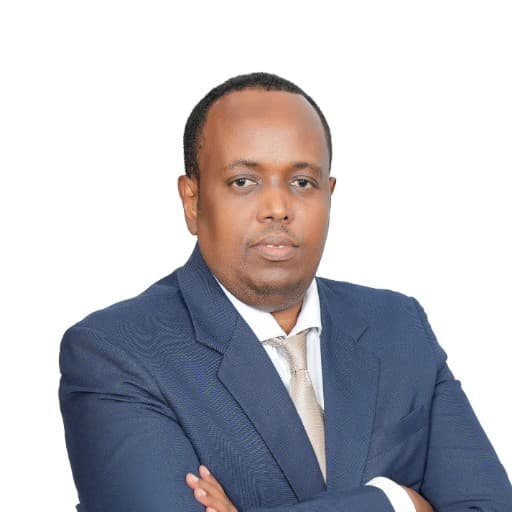
Prof Ali Yassin Shaikh
Senior Researcher
Senior Researcher | Experienced in conducting research, analyzing insights, and contributing knowledge that drives meaningful learning and informed decisions.
Recent Articles
Fiscal Dynamics in Fragile Economies: What a 2025 Study Reveals
...
Oct 1, 2026Growth, Energy Use and CO₂ Emissions in Somalia: What a 2025 ARDL Study Reveals
...
Oct 1, 2026Responsiveness, Transparency and Public Trust in Mogadishu: What a 2024 Study Reveals A digest of Sheikh Ali (2024), Journal of Somali Studies
...
Oct 1, 2026